The increasing complexity of the sanctions agenda in 2026 requires a more in-depth analysis of the entire structure of the deal. To minimize risks, it is no longer enough to find a direct match: it is necessary to consider work through intermediaries and third countries, transparency of financial channels, supply chains, transport, and supply of goods falling into sensitive categories.
Sanction risks have become broader
Today, sanctions risks can arise at various points in a transaction and be associated not only with international sanctions but also with domestic restrictive statuses.
Even if the counterparty itself appears safe, questions may arise regarding:
- its connections with other companies and individuals;
- involvement of intermediaries from third countries;
- used banks and payment routes;
- transport involved;
- product range and intended use;
- availability of information about the company or its associated individuals on internal restrictive lists.
The problem with the classical approach is that it only answers one question: is there a direct match in a specific list. To eliminate hidden threats, the verification must be comprehensive.
The sooner you discover hidden limitations, the better your chances of protecting your transactions, maintaining supply chains, and avoiding reputational losses.
Why it is important to consider internal restrictive lists
For Russian companies, verification should cover not only international sanctions lists, but also lists that are relevant to internal regulation, compliance, contractual work, and due diligence procedures.
These lists include:
- lists of special economic measures (counter-sanctions);
- lists of Foreign Agents;
- lists of organizations whose activities are recognized as undesirable on the territory of the Russian Federation
- Rosfinmonitoring lists used to monitor risks associated with terrorism and extremism.
For business, having such information can be of practical importance when:
- evaluating a counterparty before starting a partnership;
- conducting compliance check;
- internal coordination of the transaction;
- checking clients, suppliers, contractors, and other partners;
- monitoring existing counterparties.
What is important to consider in 2026
In 2026, it will be especially important for businesses to see not only direct but also indirect signs of risk.
Affiliation. A formally neutral company may be part of a more complex corporate framework, where risk is generated at the level of ownership, management, or interconnected structures.
Financial infrastructure. International sanctions practice often affects the service environment surrounding a transaction. The 20th EU sanctions package specifically strengthens measures against financial services, crypto operators, and infrastructure used to circumvent restrictions.
Logistics. Screening should cover the entire transport chain: vessels, carriers, routes, port infrastructure and other elements of the chain. The EU also strengthened measures against elements of the "shadow fleet" and related assets in April 2026.
Internal restrictive statuses. It is important to check whether the counterparty or persons associated with it appear on lists of foreign agents, undesirable organizations, Rosfinmonitoring lists, or under special economic measures.
Globas Sanctions Compliance is a tool for monitoring sanctions risks
In 2026, business security will directly depend on how deeply compliance control is automated and integrated into your daily processes.
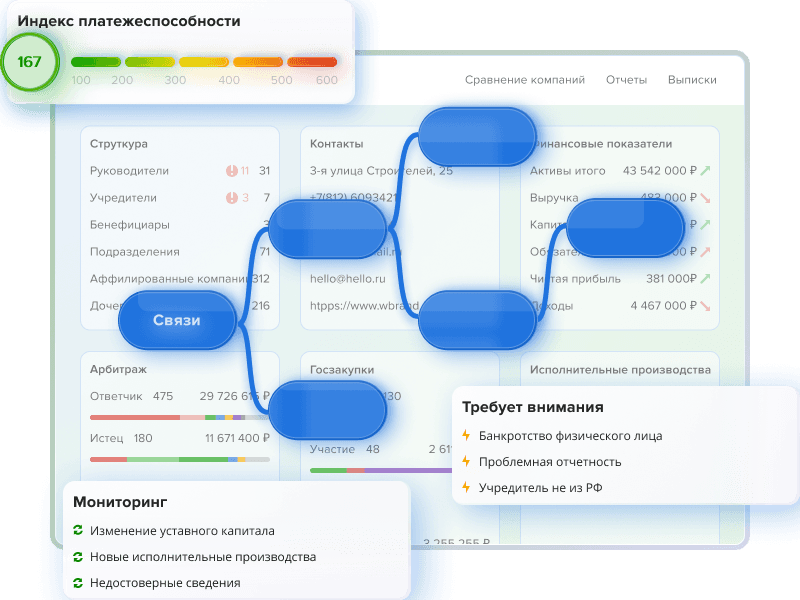
In these circumstances, it is especially important for businesses to use a reliable tool for checking, analyzing and monitoring restrictions. This solution is Sanctions Compliance module in Globas.
Sanctions Compliance module's capabilities include
- comprehensive assessment of sanctions risks for companies, individuals, vehicles, and goods;
- screening across all lists of Sanctions Compliance using single search bar;
- taking into account the 50% Rule and identifying secondary risks;
- analysis of restrictions in force within the framework of special economic measures in Russia;
- screening of sanctioned goods;
- control of risks according to requirements of the Federal Law 115-FZ;
- screening in lists of foreign agents;
- checking for connections to undesirable organizations;
- identification of Politically Exposed Persons;
- generating formalized reports and organizing monitoring;
- receiving data via GLOBAS API to integrate checks into the company's internal business processes.
Sanctions Compliance in Globas allows businesses to comprehensively assess risks associated with sanctions and other restrictions and conduct a comprehensive audit in key areas.


Globas
Sanctions Compliance
Verification of all key lists of sanctions compliance: sanctions, terrorists, extremists, foreign agents, PEPs, undesirable organizations; in-depth analysis of partners, persons, transport; the 50 Percent Rule and secondary risks; analysis of commodity sanctions by codes and names